
If you travel by train you know …
Digging for the origin of the concept of virtual transition, I found a legal document from 1915 and, as I was travelling by train, I understood that it is a fact of common sense …
Digging for the origin of the concept of virtual transition, I found a legal document from 1915 and, as I was travelling by train, I understood that it is a fact of common sense …

In 1952 the Virtual Transition principle was presented to the Railway Engineering Division of ICE.
Later it became part of the Handbook No 3 Railway Curves.

Long time ago, a good friend of mine, had an interesting design experience. He designed a non-compliant alignment and, after slueing it about 1mm, he turned it into compliant. The magic is described here …

Have you ever wondered why …
(my plan was to publish this a few days ago – sorry for the delay)

A different kind of article … Antescript Several times, in the last ten years, I started to write articles with this title. The only draft I kept is so convoluted and confusing that I might even decide to publish it. I have a few answers to this question. There is one I hesitate to put…
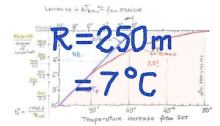
On the shoulders of CWR giants In 1994 UIC (the International Union of Railways) and ERRI (the European Railway Research Institute) set up a committee of specialists – D202 – to develop an international standard code for laying and maintenance of continuous welded rail track. Various research institutions and national railway administrations provided a complex…

Hallade was not alone. His method of track alignment rectification is by far the most used and known but there are quite few other methods for rectification and even proper realignment. One of these methods used a strange curve called involute (or evolvent). It was first described in this book from 1927. Die Absteckung von…

Motto: “I don’t see the code anymore. All I see is blonde, brunette, redhead, negative, adverse.” Cypher Disclaimer: This is not a design guidance. Don’t believe everything you read online. LandXML? LandXML is a non-proprietary data standard on the Extensible Markup Language (XML) format, developed for engineering data exchange. A LandXML file can contain civil and survey…
 A railway track blog