RailEI – The Railway “Everything” Institution?
Yes, we need a name change. Permanent way is no longer a term used in the industry and it means/always meant only track.
But PWI is not now, and it should never be …
Yes, we need a name change. Permanent way is no longer a term used in the industry and it means/always meant only track.
But PWI is not now, and it should never be …
The PWI is holding a vote for a proposed name change.
If you are a member of the Institution, vote!
If you are curious, here are my two pence on the matter (seatbelts, please) …
Digging for the origin of the concept of virtual transition, I found a legal document from 1915 and, as I was travelling by train, I understood that it is a fact of common sense …
A non-railway-related story about coins, giants, curvature equivalence, lion’s claws and apples, presenting also the strange optical connection between Isaac Newton and the railway rules for turnout bending.
A (bit) more accurate alternative method to calculate the equivalent radius for bending turnouts is based on the tangent defined by the crossing angle…

Where the author eloquently discusses the versine formula and the accuracy loss implied by ignoring a historically insignificant term of its equation, demonstrates an easily replicable CAD check of this inaccuracy, and reveals the EXACT versine formula.
An interesting research shows a comparison between the lateral resistance tests undertaken on single sleeper and tests on multiple sleepers.
The results for single sleeper tests show a huge difference between the more complex shaped sleeper and the normal box shape (up to 60% increase in lateral resistance).
But reveals also something else ..

In 1952 the Virtual Transition principle was presented to the Railway Engineering Division of ICE.
Later it became part of the Handbook No 3 Railway Curves.

Long time ago, a good friend of mine, had an interesting design experience. He designed a non-compliant alignment and, after slueing it about 1mm, he turned it into compliant. The magic is described here …

Have you ever wondered why …
(my plan was to publish this a few days ago – sorry for the delay)

A different kind of article … Antescript Several times, in the last ten years, I started to write articles with this title. The only draft I kept is so convoluted and confusing that I might even decide to publish it. I have a few answers to this question. There is one I hesitate to put…
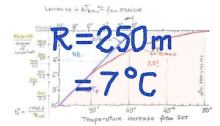
On the shoulders of CWR giants In 1994 UIC (the International Union of Railways) and ERRI (the European Railway Research Institute) set up a committee of specialists – D202 – to develop an international standard code for laying and maintenance of continuous welded rail track. Various research institutions and national railway administrations provided a complex…
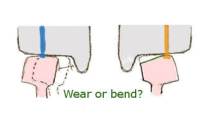
The hunt for equilibrium The railway vehicle use wheelsets formed of a pair of steel wheels fixed rigidly on an axle. This setup makes the wheels move together on track. The system evolved in time to what we know today: tronconic wheel profiles with inside flanges, rail profiles and inclination, bogies, suspensions and so on.…


 A railway track blog