Train driving regimes and equilibrium speed

In my previous posts I lightly covered: The various combinations of these forces define the train driving regimes. These are the following (not sure if all the railway networks are defining theme in the same way): A particular case of this regime is where the falling gradient is so steep that it requires the train…

Brake force

And then we have the braking force – the third type of force that influences the train movement. As with the others, this force also depends on speed – mainly due to the speed variation of the friction coefficient (μ) for various brake systems (the forces K that trigger the friction are generally the same):

The Resistance

Before reading this, I recommend reading the previous post – The Traction Force – including its disclaimer.  When a railway vehicle is required to move on track, it needs to overcome a series of resistance forces. We can call the resultant R of all these forces “the running resistance of the vehicle”. If we consider…

Traction force

I’m on my way to explain the principle curvature equivalent gradient. As this is related to a discipline I enjoyed, I choose to go the long way and start with the FORCE. But, before that, a few words of caution: Disclaimer Take this post, and any other that I will write on this subject, with…

How do the rails buckle?

Disclaimer – this includes a back-of-the-envelope calculation. Take it with a pinch of salt. If a steel beam is exposed to an increased temperature, it will tend to expand. If there is nothing to oppose that expansion, then the beam increases in length by ΔL. If, however, the beam’s ends don’t allow this expansion then…

Which is better – S&C or plain line?

Thank you for visiting this page. I would really appreciate if you could spare a minute and answer the few questions below. I’ll publish the responses with a few comments as soon as enough answers are collected. If you don’t see the form below, please go to this link: Which is better – S&C or…

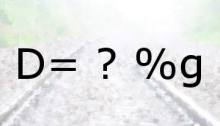
Cant deficiency converted in percentage of g

As demonstrated in a previous post here: https://pwayblog.com/2015/10/29/11-82_cant-deficiency-un-compensated-acceleration-pway/ , the cant deficiency is the conventional representation of the uncompensated lateral acceleration. And since cant deficiency is an acceleration, we can easily represent it as a percentage of g, the gravitational acceleration. The formula that relates the cant deficiency D to un-compensated lateral acceleration is: The…