snippet – Track realignment using involutes

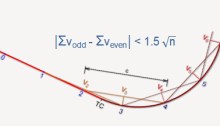
Hallade was not alone. His method of track alignment rectification is by far the most used and known but there are quite few other methods for rectification and even proper realignment. One of these methods used a strange curve called involute (or evolvent). It was first described in this book from 1927. Die Absteckung von…
What is the TGSD Calculator?

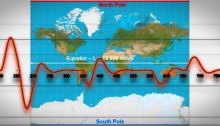
This post follows up from the Faith of TGSD Calculator. Before my four year too late discussion with David Marriott I wrongly believed that the TGSD Calculator computes a special kind of uncompensated accelerations that appear only at the points where any design element changes to another and turns those into a wave-like shape that…

A (Hallade) moment to remember

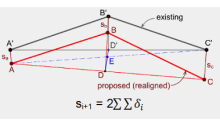
For the track realignment methods (Hallade or similar) the existing alignment is surveyed by measuring the outer rail offsets (versines) to overlapping chords. One such setup is drawn below: A’, B’, C’ are points on the outer rail of the track and for point B’ the versine B’D’ =  vB ex is measured to the chord A’C’. We…

Checking the versine survey precision

A field measurement of any kind is never exact and intrinsically contains errors (NJDoT Survey Manual – 2014). For track topographical measurements some of these errors are known and eliminated by applying appropriate corrections and compensations. Even after all known errors are eliminated however, a site measurement will still be in error by some unknown value. To minimise the…

Types of versines used for track realignment methods

There are three types of versines used for the track realignment and rectification methods (Radu, 2003): Measured (existing) versine – the versine measured with a real chord on the outer rail of the real existing track. This is the result of the versine (Hallade) survey and based on it are computed the track offsets (slues…

Track Realignment and Rectification

The running of the trains over the railway track is inducing vertical and lateral forces that, in time, are affecting the track alignment, changing incrementally the installed track and causing track irregularities.  On curved track this deterioration process is more significant due to the additional effect of the lateral (centrifugal) acceleration. When the irregularities become…

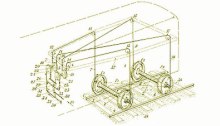
Mauzin (Hallade) track measurement car

The measurement and analysis of track geometry is carried out regularly by all the railway infrastructure administrators in order to obtain data from which the track quality is established and the maintenance can be scheduled (Cope – 1993). Historically, the use of track inspection cars can be traced back to the early 1920’s in France…