Circle or “egg”?

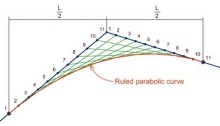
After the post about the limits of vertical acceleration, and even before, I was asked what was the original curve used to connect vertical gradients. What was first, the circle or the “egg”- the parabolic curve? The expected answer was “the circular curve” because, presumably, a circle can be drawn easier than a parabola… “How…

The versine formulae

An anecdote: Track geometry exam, somewhere at a Civil Engineering University. One of the exam subjects is realignment methods and types of versines. This important subject was covered during the track course hours but also in four seminars and in a realignment project homework – so it was supposed to be an easy one … After checking the…

The limits of vertical acceleration

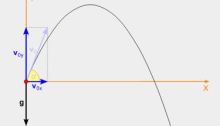
The theory of vertical movement. The parabolic projectile motion An object thrown in the air, near the earth’s surface, moves along a parabolic path under the action of gravity only. The only force of significance that acts on the object is gravity, which acts downward to cause a downward acceleration. Because of the object’s inertia, no external horizontal force is needed…

La voie ferrée

When it comes to Railway track engineering literature, there are a few books we can consider “classic”. Even old, some very old, these books still have significant railway engineering value and can be always a good reference both for young and inexperienced engineers as for the ones that already have robust railway track experience and…

Maximum joint expansion gap

  A rail joint is a track component that connects two pieces of rail and it provides room for rail expansion and contraction due to the changes in temperature. The mechanical rail joint is designed to allow a gap variation and, as such, has two well defined limits of this gap. The minimum gap of a mechanical rail…

How is the cant measured?

The good old times Since the early beginnings of the railway, the track engineers were aware of the centrifugal forces influence to the train riding when passing through a curved section of track. To compensate this influence, the track was inclined laterally by creating a positive level difference between the outer and inner rails of a…

Why a right hand curve is positive?

In transportation engineering there is the following signage convention  for curves in horizontal alignment design: a right hand curve is considered positive a left hand curve is considered negative This convention is considered relative to the stationing direction of that alignment. This signage convention is established in the following way (see the figure above):