The daily workout of a railway engineer
This is part of my daily workout to stay fit… because a rail lift (and slue) a day keeps the doctor away. I cut this rail myself, at Innotrans 2012.
This is part of my daily workout to stay fit… because a rail lift (and slue) a day keeps the doctor away. I cut this rail myself, at Innotrans 2012.

A good friend of mine, knowing I’m working in the United Kingdom and that I am a kind of a fan of the European Norms (not only) for track, asked me: Does Brexit means no more European Norms in UK? The simple answer: No.

Thank you for your 3070 visits in these first six months of 2016!

INTRODUCTION In transportation infrastructure design the route is defined based on its axis (centreline) – the alignment model. This simplified abstract model is designed in such a way to clearly define the principle course of the infrastructure project. For most of the transportation means the infrastructure alignment design is split into two main two-dimensional complex…
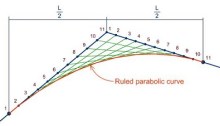
After the post about the limits of vertical acceleration, and even before, I was asked what was the original curve used to connect vertical gradients. What was first, the circle or the “egg”- the parabolic curve? The expected answer was “the circular curve” because, presumably, a circle can be drawn easier than a parabola… “How…

An anecdote: Track geometry exam, somewhere at a Civil Engineering University. One of the exam subjects is realignment methods and types of versines. This important subject was covered during the track course hours but also in four seminars and in a realignment project homework – so it was supposed to be an easy one … After checking the…
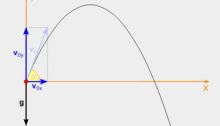
The theory of vertical movement. The parabolic projectile motion An object thrown in the air, near the earth’s surface, moves along a parabolic path under the action of gravity only. The only force of significance that acts on the object is gravity, which acts downward to cause a downward acceleration. Because of the object’s inertia, no external horizontal force is needed…

Another classic book it sure is “British Railway Track Design, Construction and Maintenance”, edited by Geoffrey H Cope and having around 40 contributors for writing the 30 chapters of this essential track compendium. Its last six edition was published in 1993 by The Permanent Way Institution. Presenting the essential principles but also the British specifics…

