The virtual transition – a pway way to deal with infinity

One fundamental “difference” between pure science and engineering is the way the second deals with absolutes, unknowns, infinities and other such theoretical concepts, irrelevant, difficult or dangerous to materialise in an engineering construct and project.
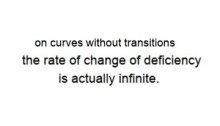
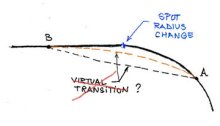
In track design the “virtual transition” is, for a few countries, one such a method to deal with a particular infinite value…
One sleeper vs many – you will never guess which is stronger!

An interesting research shows a comparison between the lateral resistance tests undertaken on single sleeper and tests on multiple sleepers.
The results for single sleeper tests show a huge difference between the more complex shaped sleeper and the normal box shape (up to 60% increase in lateral resistance).
But reveals also something else ..

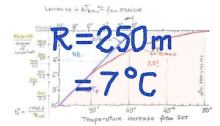
Measuring the track radius in degrees Celsius

On the shoulders of CWR giants In 1994 UIC (the International Union of Railways) and ERRI (the European Railway Research Institute) set up a committee of specialists – D202 – to develop an international standard code for laying and maintenance of continuous welded rail track. Various research institutions and national railway administrations provided a complex…

snippet – Lateral resistance before and after tamping

Things you find on Spark. In 1972, RTC conducted a series of tests to evaluate the effect on tamping on the track lateral resistance. Their results, published in 1973, have been referenced in numerous other research documents, including the ERRI D202 Reports – the committee that produced UIC Leaflet 720R “Laying and Maintenance of CWR…