The Cubic Parabola – a complicated simplification

Ten years ago, one of my first British friends asked me “Why 4°?” The Clothoid is by far the most used transition curve for railway and highway alignment design. I wrote about this marvelous curve in an old article on this blog – here. Although the Clothoid is the ideal transition for linear variation of…

Where’s the point?

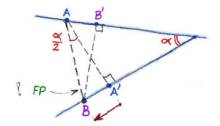
All the railway networks have design rules for marking the limit from which it is safe to stable a vehicle on a line, without the risk of obstructing the train passage on the other line of an S&C (turnout or whatever other arrangement). In the UK this limit comes in a pair – Fouling Point…

And I wonder, still I wonder, who cut the rails?

Aren’t the adjustment switches some really nice devices? On one side we have rails subjected to thermal stress, tending to seriously expand or contract due to the environment temperature, and on the other side no stress is transferred. Smart! We cut the rails in that funny shape, grease the clamp plates, and we let the…

How do the rails buckle?

Disclaimer – this includes a back-of-the-envelope calculation. Take it with a pinch of salt. If a steel beam is exposed to an increased temperature, it will tend to expand. If there is nothing to oppose that expansion, then the beam increases in length by ΔL. If, however, the beam’s ends don’t allow this expansion then…

Which is better – S&C or plain line?

Thank you for visiting this page. I would really appreciate if you could spare a minute and answer the few questions below. I’ll publish the responses with a few comments as soon as enough answers are collected. If you don’t see the form below, please go to this link: Which is better – S&C or…